OEM vs ODM Kiosks: Which Customization Route Fits Your Project
By MHY Engineering Team · Updated · 8 min read
"Custom kiosk" can mean two very different projects — swapping a logo onto an existing design, or redesigning the enclosure from scratch — and the two routes differ enormously in cost, MOQ and lead time. Conflating them is one of the most common causes of quote sticker-shock and timeline surprises in kiosk sourcing. This guide breaks down what OEM and ODM customization each actually involve, so you can scope your RFQ correctly from the start. See our certification FAQ for how customization depth can also affect required re-testing.
1. What OEM customization covers
OEM (Original Equipment Manufacturer) customization applies your branding to an existing, already-tooled kiosk design — your logo on the bezel, your brand colors on the housing, a custom boot animation or UI wallpaper, and your packaging and documentation. The mechanical structure, enclosure mold and internal layout stay exactly as the manufacturer already builds them. Because no new tooling is required, OEM orders typically have low MOQs (sometimes as low as 1-10 units) and lead times only slightly longer than a standard stock order. This is the right route when an existing design already meets your functional needs and you primarily need it to look and feel like your own product.
2. What ODM customization covers
ODM (Original Design Manufacturer) customization goes further — redesigning the enclosure shape, dimensions, port layout or internal module arrangement to a specification unique to your project, which means new tooling (injection molds, sheet-metal dies) has to be built. This produces a genuinely differentiated product that competitors can't simply source off the same shelf, but it comes with a real cost and time investment: higher MOQs (commonly 50-200+ units, since tooling cost is amortized across the order) and 35-60 days typical for mold-making and first-sample validation before mass production even starts.
3. OEM vs ODM at a glance
| OEM (branding) | ODM (new tooling) | |
|---|---|---|
| What changes | Logo, color, UI, packaging | Enclosure shape, dimensions, internal layout |
| Typical MOQ | 1-10 units | 50-200+ units |
| New tooling required | No | Yes — molds or dies |
| Typical lead time add-on | A few days | 35-60 days for mold + samples |
| Upfront cost | Low / none | Tooling fee (one-time or amortized) |
| Product differentiation | Cosmetic only | Structurally unique to you |
| Best for | Market validation, smaller volumes | Established volume, brand-defining hardware |
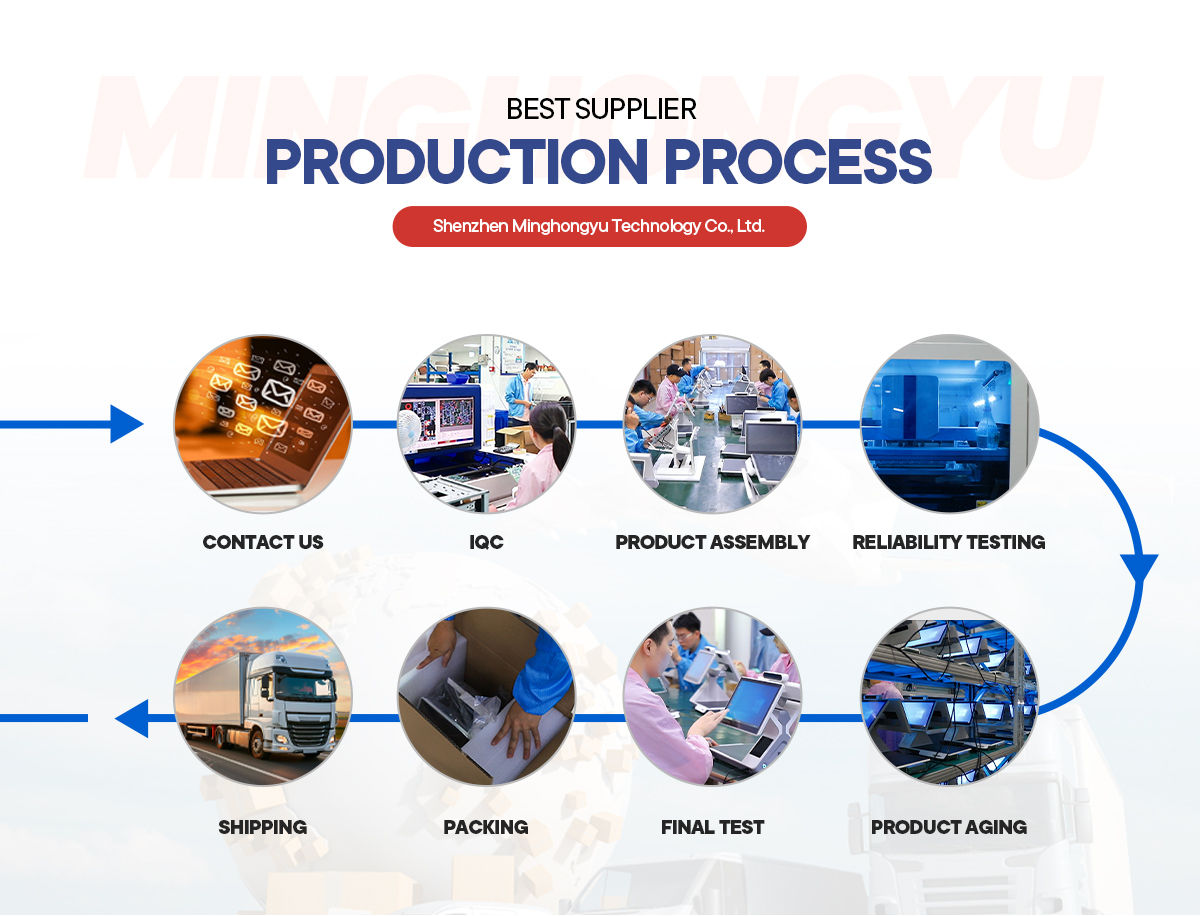
4. The six-step customization process
Requirements
Define target use case, volume and which parts of the design need to change.
Design review
For ODM, structural and industrial design drawings are reviewed and confirmed before tooling starts.
Tooling / setup
OEM: branding assets prepared. ODM: molds and dies are built (the 35-60 day step).
First sample
A pilot unit is produced for validation before committing to the full order.
Mass production
Once the sample is approved, the confirmed order quantity goes into production.
QC & shipment
Final inspection against the approved sample, then packing and export logistics.
5. Which route fits your project
Choose OEM if you're validating a new market or use case, ordering below ODM-typical MOQs, or an existing design (browse our self-service kiosk and payment terminal lines) already fits your functional requirements. Choose ODM if your brand needs hardware that's structurally distinct from what competitors can source, your volume justifies amortizing tooling cost, or your use case has a genuinely unusual form-factor requirement an existing enclosure can't satisfy — a common path is starting with OEM to prove out volume, then moving to ODM once that volume justifies the tooling investment.
6. Frequently asked questions
What is the main difference between OEM and ODM kiosk customization?
What is a typical minimum order quantity (MOQ) for each route?
How long does ODM tooling take compared to OEM branding?
Can I switch from OEM to ODM later, once volumes grow?
Does ODM tooling cost include the mold, or is that billed separately?
Not sure which route fits your project?
Tell us your target volume and how much the design needs to change — we'll recommend OEM or ODM and quote both if it helps you decide.